Elevate Bottle
Choosing a sustainable bottle is not as simple as replacing plastic with glass. Every material carries impacts from extraction, manufacturing, transport, and disposal. The United Nations Environment Programme’s 2023 Turning off the Tap report identifies packaging as the source of 36% of global plastic production. The OECD’s Global Plastics Outlook reports that only 9% of plastic waste was ultimately recycled in 2019. These figures make bottle design and recovery systems hard to ignore.
Options include recycled PET, lightweight glass, aluminum, reusable stainless steel, and bottles made with bio-based materials. None is automatically the best choice. A heavy glass bottle, for example, may need more fuel to transport; a reusable bottle delivers benefits only when people refill it enough times. Material origin, recycled content, local collection, and actual reuse all matter. A neat label is not proof.
To Minimize the environmental footprint of bottle production, brands need to consider the bottle’s full life cycle—not just its appearance or material name. William McDonough, an architect and circular-design expert, puts the challenge plainly: “Being less bad is not being good.” His principle encourages designers to prevent waste, use materials thoughtfully, and plan for repeated use or effective recovery. Still, the answer depends on local conditions. A bottle that works well in one return-and-refill system may perform poorly where collection is limited. The sections ahead compare common eco-friendly bottle types, their trade-offs, and the details buyers should check before choosing.
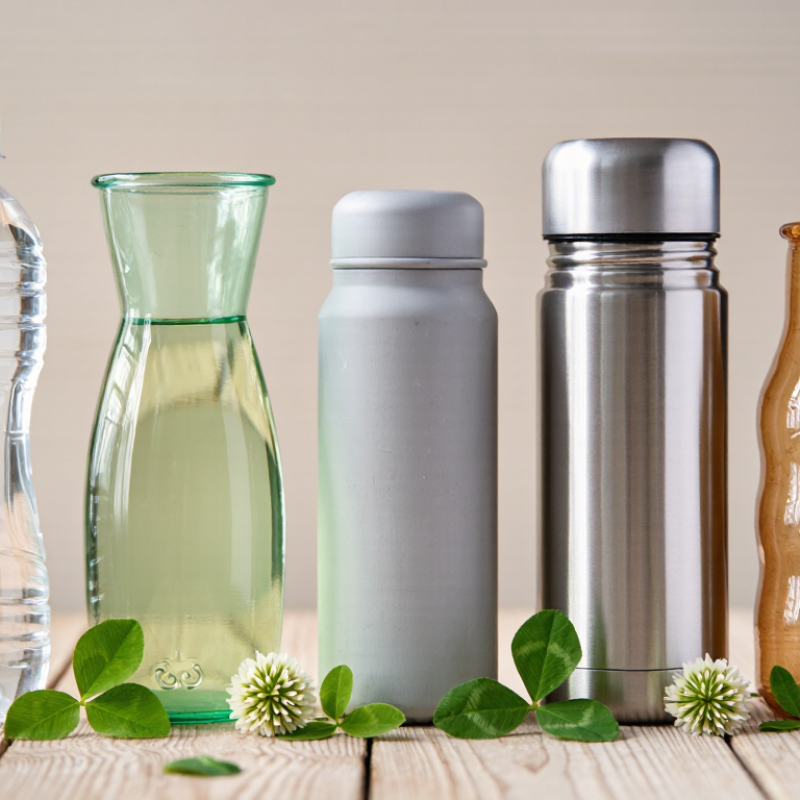
Top Eco Friendly Bottle Types for Sustainable Packaging
What Makes a Bottle Eco-Friendly?
An eco-friendly bottle is not defined by its material alone. Its impact depends on sourcing, manufacturing energy, shipping weight, reuse, and local recycling options. The OECD’s Global Plastics Outlook (2022) estimates that 353 million tonnes of plastic waste were generated worldwide in 2019. Packaging made up about 40% of that waste, while only 9% was ultimately recycled. That matters. A recyclable label means little if local facilities cannot process that bottle.
Look for verified recycled content, simple construction, clear material labels, and durability for repeated use. Reuse is not automatically better: a heavy bottle may need many trips to offset its production footprint, particularly when transported far or washed with hot water. There is no universal winner. Glass offers chemical stability, but its weight can raise transport emissions. Lightweight plastics may reduce shipping loads, yet depend on effective collection and recycling. Compare the full life cycle, not just one appealing feature. Some trade-offs remain difficult to measure.
Tips: Check which bottle materials your local program accepts before buying. Choose a bottle you will reuse, with a replaceable cap if possible. Compare its weight and recycled content instead of relying on vague “green” claims.
Sustainable bottle packaging begins with material choice, but no material is impact-free. Recycled glass can retain quality through repeated use, and its weight gives bottles a sturdy feel. Yet moving heavy glass uses more fuel, especially across long distances. A local refill loop may change that calculation.
Recycled PET is light and familiar in many collection systems. It can reduce demand for new plastic, though color, labels, and residue may complicate sorting. Food-grade recycled content also depends on reliable processing and clean feedstock. That part is easy to overlook.
Plant-based plastics sound promising, but “plant-based” describes the source, not what happens after disposal. Some need specific composting conditions that ordinary bins do not provide.
Paper-based bottles often pair a fiber shell with a thin barrier layer. The shell feels tactile and can use renewable fiber, while mixed materials may be harder to separate. Aluminum is another option: it is light, durable, and widely recyclable where collection exists. Still, making primary aluminum takes substantial energy, so recycled content matters. For any bottle, consider how it will be filled, transported, emptied, and collected. A material that performs well in a sample test may disappoint in a wet bathroom or a busy return system. Practical testing matters. Manufacturers should verify material claims and explain disposal limits plainly.
Major Types of Eco-Friendly Bottles
Reusable stainless steel bottles suit daily use and frequent refilling. They resist dents better than many thin containers, though they can feel heavy in a bag. A narrow opening may also make cleaning harder. Look for a smooth interior and a lid with few hidden crevices.
Glass bottles keep flavors neutral and are easy to inspect for residue. Recycled glass can reduce demand for newly sourced material, but glass is heavy and may break if dropped on tile. It works well at home or in an office. A protective sleeve helps, but it does not make glass unbreakable.
Aluminum bottles are lightweight and widely recyclable where local collection accepts them. Many have an inner lining, so check care instructions and avoid assuming every bottle belongs in the same recycling stream. Recycled-plastic bottles, including those made with recycled PET, can be light and practical for travel. Their value depends partly on local recycling access and how long the bottle stays in use. Bio-based bottles are another option, but “plant-based” does not always mean compostable in a backyard. No option is perfect. Match the material to how it will be cleaned, carried, and eventually handled as waste.
Approximate material density by bottle material (g/cm³)
Material density is a physical property, not a measure of environmental impact. Reuse, recycled content, local recycling systems, and the energy used in manufacturing all affect a bottle’s overall sustainability.
A bottle’s material matters, but its daily use matters too. Glass can be recycled repeatedly where collection systems accept it, yet it is heavy to transport and can break. Aluminum is lightweight and widely recyclable in many places, though recycling access varies. Recycled plastic can reduce demand for new material, but not every bottle is accepted locally. Check the recycling label and your local collection rules. Small details count.
Reuse changes the calculation. A durable bottle may avoid many single-use containers, but only if people keep using it. Wash it regularly, and choose a shape that is easy to clean, with a cap that does not trap residue. Stainless steel and sturdy glass can suit repeated use; each still needs energy and materials to make. Reuse is not automatically greener in every situation. That part is easy to overlook.
Tips: Refill a bottle you already own before buying another. Keep it near your bag or sink so it is easy to remember. For recycling, empty it and separate the cap only when local guidance asks. A bottle can look sustainable and still be poorly matched to local habits.
Choosing the right bottle starts with the product, not the material trend. A fizzy drink needs pressure-resistant packaging and a closure that holds its seal. Oil or skincare may need a light barrier to protect quality. Check fill volume, shelf life, shipping conditions, and how easily customers can pour from the bottle. A bottle that looks sustainable can still be a poor fit.
Glass offers strong product protection and can be reused, but its weight may increase transport impacts. Lightweight plastic can reduce shipping weight, though recycling access varies by location and material. Aluminum is light and widely collected in some areas, but coatings and product compatibility matter. Paper-based bottles may use less plastic, yet liners can complicate recovery. There is no perfect option. A common planning miss is choosing by material alone.
Tips: Test the bottle with the actual product, cap, and filling line before ordering at scale. Check local recycling guidance, and ask suppliers for material details. Fit matters more. Test before scaling. If a reusable bottle is the goal, consider whether customers can realistically clean and return it. A small pilot may reveal inconvenient details you did not expect.
| Bottle type | Common packaging needs | Sustainability strengths | Key considerations | Best choice when… |
|---|---|---|---|---|
| Recycled PET (rPET) | Cold drinks, personal-care liquids, and lightweight retail packaging | Uses recycled plastic, can reduce demand for virgin PET, and is lightweight to transport. | Food-contact use and recycled-content limits depend on applicable regulations and supply. Collection and bottle-to-bottle recycling access vary by location. | A lightweight, transparent bottle is needed and a reliable recycled-PET supply is available. |
| Recycled HDPE | Shampoo, household cleaners, personal-care products, and other opaque liquids | Recycled HDPE can use post-consumer material; the plastic is durable and relatively lightweight. | Color, product residue, labels, pumps, and local sorting rules can affect recycling. Confirm compatibility with the product and recycling stream. | The contents need a sturdy, opaque container and the local system accepts the bottle format. |
| Refillable glass | Beverages, sauces, and products sold through deposit-return or refill programs | Can be washed and reused multiple times in a well-managed return system; glass can be recycled where collection is available. | Heavier than plastic or aluminum, so transport can require more energy. Reuse depends on return rates, washing, and delivery distances. | A local return-and-refill loop can keep bottles in circulation instead of relying on single-use recycling. |
| Lightweight glass | Premium beverages, oils, and products that need a rigid container or glass compatibility | Glass is inert for many products and can be recycled where suitable collection and processing are available. | Manufacturing requires high heat, and weight and breakage can increase transport impacts. Recycling alone does not guarantee a lower overall footprint. | Product protection or material compatibility is important, and the bottle can be made lighter or reused. |
| Aluminum | Beverages, travel products, and durable refillable containers | Lightweight and durable; aluminum is recyclable in many established collection systems and can be recycled repeatedly when properly recovered. | Primary aluminum production can be energy-intensive. Bottles often need an interior coating, which should be suitable for the product and recycling process. | A lightweight, durable format is needed and recycled content or a reuse system can be specified. |
| Bio-based PET | Beverage and personal-care bottles designed for PET packaging systems | Bio-based PET can replace some or all fossil-derived feedstock while retaining PET’s material properties. | “Bio-based” does not necessarily mean biodegradable or compostable. Feedstock sourcing and compatibility with local PET recycling systems matter. | The goal is to change feedstock while keeping a bottle compatible with an established PET collection stream. |
Selection note: Compare packaging using the same functional requirements, including product protection, bottle weight, recycled content, transport distance, reuse potential, and local collection options. A material’s recyclability or bio-based content alone does not determine its overall environmental impact.
Its impact depends on materials, production energy, shipping weight, reuse, and local recycling. No single feature tells the whole story.
No. Local facilities may not accept its material. Check your collection rules before buying.
It depends on local systems and how you use the bottle. Glass is stable but heavy; aluminum is light, though access varies. Recycled plastic can use less new material.
Not automatically. Keep using it long enough to offset the resources used to make and transport it. That can be hard to measure.
Check its weight, recycled content, durability, and material label. A replaceable cap can also help extend its useful life.
Choose a shape that is easy to reach inside. Wash it regularly, and avoid caps that trap residue.
Empty it, then separate the cap only if local guidance asks you to. Small details matter.
Not necessarily, but its weight can increase transport emissions. A heavy glass bottle may suit repeated local use; long-distance shipping changes the calculation. No neat answer.
Eco-friendly bottles are designed to reduce resource use and waste throughout their life cycle, from material sourcing and manufacturing to reuse and disposal. Options may include glass, recycled or recyclable plastics, aluminum, and renewable plant-based materials. Each has different advantages: glass can be reused and recycled, lightweight plastics can reduce transport impacts, and recycled materials can help conserve raw resources. To Minimize the environmental footprint of bottle production, it is also important to consider energy and water use, material efficiency, and the availability of suitable recycling systems.
The most sustainable choice depends on the product, how it will be stored and transported, and whether customers can reuse or recycle the packaging locally. Refillable bottles can reduce waste when they are used many times, while bottles made with recycled content can support material recovery. Comparing durability, weight, compatibility, and end-of-life options helps businesses select packaging that balances practical needs with environmental goals.
