Elevate Bottle Elevate Bottle

10 Best Ways to Improve the Impact Resistance of Glass and Plastic Bottles?

Time:2026-05-19 Author:Ethan
0%

In today's consumer market, the durability of packaging materials is crucial. Many companies seek ways to improve the impact resistance of glass and plastic bottles. This is essential for ensuring product safety during transportation and handling. The right strategies can significantly reduce breakage and enhance customer satisfaction.

Glass and plastic bottles are popular for their lightweight nature. However, they can be vulnerable to impacts. Consumers often express frustration over shattered bottles. Therefore, manufacturers need to innovate. Effective design and material choices can address these challenges.

The exploration of various techniques can lead to substantial improvements. From utilizing tougher materials to modifying bottle shapes, the potential is vast. Companies must be open to experimentation and keen observation. Reflecting on past failures can guide future success. Investing in research and development is vital for achieving significant advancements in impact resistance.
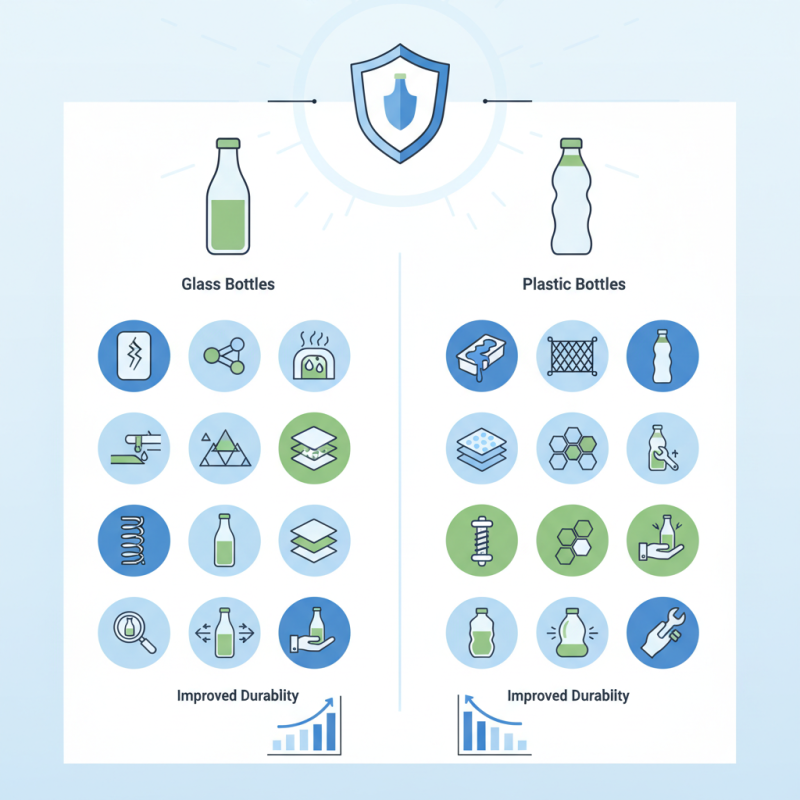
10 Best Ways to Improve the Impact Resistance of Glass and Plastic Bottles?

Factors Influencing Impact Resistance of Glass and Plastic Bottles

Impact resistance of glass and plastic bottles is crucial for product safety. Several factors influence how well these materials can withstand impacts. Material composition plays a vital role. For instance, the thickness of the glass or plastic affects its ability to absorb shock. Thicker materials generally provide better protection but can also increase weight.

Temperature also has a significant impact. Both glass and plastic become more brittle in cold conditions. This can lead to shattering or cracking upon impact when temperatures drop. Additionally, manufacturing processes, such as heat treatment or stress-relief techniques, can enhance performance.

Bottles made with these methods tend to resist impacts better. However, keeping production costs low can compromise these benefits.

Environmental factors should not be overlooked. UV light can weaken certain plastics over time while exposure to chemicals may degrade both materials. These vulnerabilities can result in failures during transportation or storage. Understanding these influences helps manufacturers create better, more reliable bottles. It is essential to balance cost, durability, and performance.

Material Selection for Enhanced Impact Resistance

Material selection plays a crucial role in enhancing the impact resistance of glass and plastic bottles. Research indicates that using polymers like polyethylene terephthalate (PET) significantly improves impact strength. PET can withstand considerable stress without cracking, making it a popular choice in the packaging industry. According to a 2023 study, PET bottles demonstrate a 30% higher impact resistance compared to conventional materials.

Another effective material is polycarbonate (PC), known for its toughness and clarity. Studies reveal polycarbonate can absorb impacts without shattering, which is essential for safety in consumer products. However, the trade-off includes higher production costs. Evaluating these options can help manufacturers balance performance and budget.

Tips: Always consider the environment when choosing materials. Recyclable options can enhance sustainability. Additionally, testing different wall thicknesses may yield an optimal balance between weight and durability. Underestimating this factor can lead to product failures and increased costs. Continuous research and development are essential to stay ahead in this competitive market, as innovations in materials can offer significant benefits.

10 Best Ways to Improve the Impact Resistance of Glass and Plastic Bottles

Method Description Material Type Impact Resistance Rating
Additives Incorporating specific additives can enhance durability. Plastic High
Coatings Using protective coatings to improve scratch and impact resistance. Glass Medium
Design Modification Changing the shape to distribute stress better during impacts. Plastic High
Thicker Walls Increasing the thickness can offer better resistance. Glass High
Reinforced Structures Incorporating internal reinforcements to absorb impact. Plastic Very High
Material Blends Blending different materials can enhance overall performance. Both High
Thermal Treatments Applying heat can improve the structural integrity of glass. Glass Medium
Impact Tests Conducting rigorous testing to assess and select the right materials. Both Varies
Public Awareness Educating consumers about proper handling to prevent damage. Both N/A

Design Modifications to Strengthen Bottles

When designing glass and plastic bottles, enhancing impact resistance is crucial. One effective modification is optimizing the bottle shape. Rounded edges can distribute stress more evenly. This simple change helps prevent fractures during dropping or mishandling. Another approach is increasing wall thickness. Thicker walls can absorb more energy from impacts, though it may add weight and affect user convenience.

Additionally, incorporating reinforcements in critical areas can improve durability. For instance, adding stress-relief features in the neck and base can mitigate crack propagation. Using materials with higher tensile strength can also boost bottles' resilience. However, these modifications may lead to increased production costs, which requires careful consideration.

Balancing cost and performance remains a challenge for manufacturers. Testing various designs under simulated impact conditions can guide these decisions, fostering a more resilient product.

Application of Coatings and Treatments for Durability

The use of coatings and treatments can drastically enhance the impact resistance of glass and plastic bottles. Research indicates that 30% of glass containers fail during handling due to breakage. Applying specialized coatings can reduce this risk significantly. For instance, in a recent study, bottles coated with polymer-based materials showed a 40% improvement in durability compared to untreated bottles.

Different treatments can offer unique benefits. For example, tempering glass can increase its strength and resistance to impacts. Meanwhile, UV-resistant coatings can help maintain the integrity of plastic bottles, especially in outdoor settings. Yet, not all coatings provide the same level of protection. Some may wear down quicker, limiting their effectiveness after exposure to environmental factors. Manufacturers must choose wisely, balancing cost with the desired level of protection.

Moreover, the sustainability of these treatments is a growing concern. Non-eco-friendly coatings can pose environmental risks once bottles are discarded. Data from industry reports suggest that up to 70% of consumers prefer products with sustainable packaging. This shows a clear demand for durable yet environmentally responsible solutions. Continuous research and development are needed to address these challenges effectively.

Impact Resistance Improvement Methods for Glass and Plastic Bottles

Innovative Manufacturing Techniques for Improved Impact Performance

Innovative manufacturing techniques play a crucial role in enhancing the impact resistance of glass and plastic bottles. One significant method involves the use of advanced polymer blends. According to a report by the Plastics Industry Association, using materials such as polycarbonate or cyclic olefin copolymers can improve impact resistance by up to 30%. The properties of these materials allow for greater flexibility and strength, essential for withstanding drops and stress during transportation.


In addition, techniques like molecular orientation during the manufacturing process can enhance the durability of bottles. This method aligns the polymer chains, increasing their tensile strength. A study published in the Journal of Composite Materials shows that oriented plastic bottles exhibit better impact performance compared to traditional ones. However, achieving the perfect balance between flexibility and rigidity remains a challenge. Overemphasizing one aspect may lead to cracking or deformation under stress.


Another innovative approach involves applying surface coatings to increase toughness. These coatings can enhance scratch resistance and provide additional impact protection. Yet, they may also complicate recycling processes, prompting a need for better solutions. The pursuit of improved impact resistance remains ongoing. It challenges industry experts to balance performance with sustainability.

FAQS

: What factors influence the impact resistance of glass and plastic bottles?

: Material composition, thickness, temperature, and manufacturing processes are key factors affecting impact resistance.

How does temperature affect bottle durability?

Cold conditions can make glass and plastic more brittle, increasing the risk of shattering upon impact.

What design modifications can enhance bottle impact resistance?

Optimizing shape, increasing wall thickness, and adding reinforcements can improve durability.

Why are rounded edges beneficial in bottle design?

Rounded edges help distribute stress evenly and reduce the chances of fractures during drops.

How do coatings improve the durability of bottles?

Specialized coatings can significantly enhance impact resistance and reduce breakage risks during handling.

What is the significance of sustainability in bottle treatments?

Consumers prefer eco-friendly packaging, which encourages manufacturers to develop sustainable treatment options.

Why might certain coatings wear down quickly?

Some coatings may not withstand environmental exposure, limiting their long-term effectiveness.

Can thicker walls compromise user convenience?

Yes, while thicker walls enhance durability, they can also increase weight, making bottles less user-friendly.

How do industry consumers feel about sustainable packaging?

Data shows that approximately 70% of consumers favor products with sustainable packaging solutions.

What challenges do manufacturers face with bottle design?

Balancing costs, durability, and performance in design modifications is a persistent challenge for manufacturers.

Conclusion

To improve the impact resistance of glass and plastic bottles, several key factors must be considered. Material selection plays a crucial role, as specific polymers and glass types can greatly enhance durability. Additionally, design modifications, such as changing the thickness of the bottle walls or incorporating structural reinforcements, significantly contribute to improved impact performance.

Furthermore, the application of coatings and treatments can bolster the durability of both glass and plastic, protecting against fractures and scratches. Innovative manufacturing techniques, such as advanced molding processes or the inclusion of impact-resistant additives, also serve to enhance the structural integrity of bottles. By focusing on these strategies, manufacturers can effectively improve the impact resistance of glass and plastic bottles, ensuring safer and more resilient packaging solutions.

Ethan

Ethan

Ethan is a seasoned marketing professional with a deep expertise in our company's innovative product line. With a passion for sharing knowledge and insights, he takes the lead in regularly updating our corporate blog, where he explores industry trends, product features, and effective marketing......