 Elevate Bottle
Choosing China’s top safe materials for kids’ drinking bottles requires more than reading a BPA-free label. Parents need to examine the bottle’s body, lid, straw, seals, and manufacturing controls. A shiny surface does not automatically mean safer material.
This guide explores stainless steel, glass, food-grade silicone, and carefully selected polypropylene. Each option has practical strengths. Stainless steel resists dents and odors. Glass offers a clean, stable surface, but it may break. Silicone feels soft around small mouths, although poor-quality silicone can retain smells. Polypropylene is lightweight and useful for school bags, yet heat exposure and repeated wear deserve attention.
Dr. Jane Muncke, a food-packaging safety scientist, has stated, “We need to move away from the assumption that chemicals in plastics are safe until proven otherwise.” Her warning supports a more careful approach to Improve the safety of kids' drinking bottle materials. Look for clear material specifications, migration testing, traceable production, and instructions for washing and temperature limits.
Small details matter. A loose straw valve can collect milk residue. A scratched inner wall may become harder to clean. These problems are easy to overlook. I also admit that “the safest” bottle depends on use, age, cleaning habits, and design quality. No single material wins every situation.
The following discussion compares materials made or supplied in China, focusing on durability, hygiene, heat resistance, and daily child safety. Reliable evidence matters more than attractive colors or confident packaging claims.
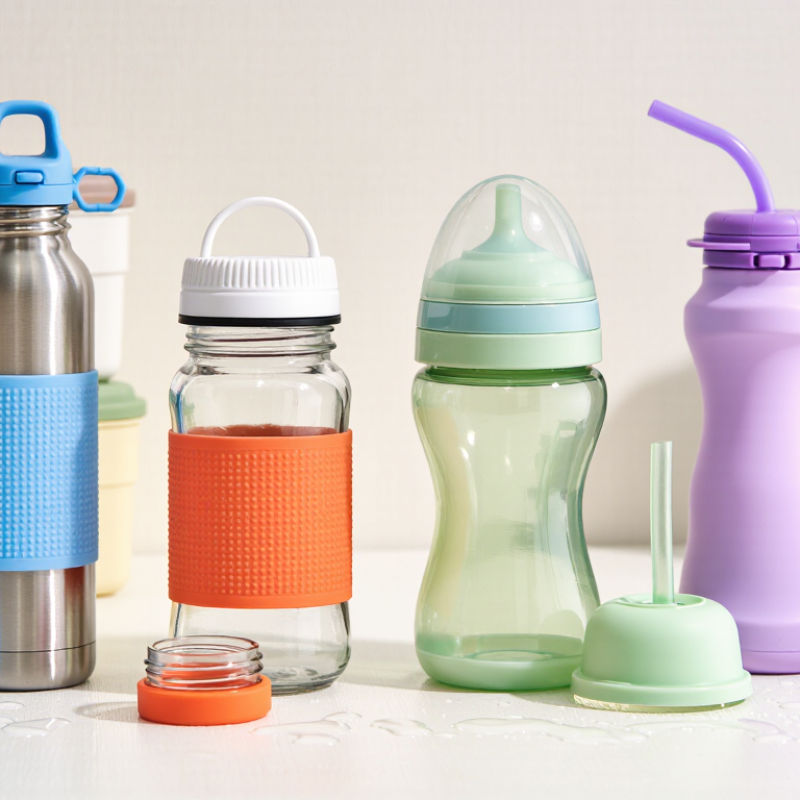
A safe children’s drinking bottle begins with chemistry, not color or thickness. The material should resist harmful migration into water, milk, or juice. It should also remain stable during normal heating, washing, and repeated use. EFSA’s 2023 scientific re-evaluation set the tolerable daily intake for bisphenol A at 0.2 nanograms per kilogram of body weight per day. That level is 20,000 times lower than its previous assessment, showing how safety standards can change with new evidence.
Stainless steel and glass are strong options when their food-contact surfaces are intact and easy to clean. Polypropylene can also be suitable when it is food-grade and tested for intended use. Silicone is useful for seals, but its quality depends on formulation, curing, and manufacturing controls. Look for clear food-contact compliance, migration testing, and temperature guidance. Avoid relying on vague claims such as “non-toxic.” Heat changes things. Do not pour boiling liquids into a bottle unless the instructions allow it.
Real-world care matters as much as material selection. A bottle with deep scratches, cloudy plastic, loose seals, or trapped residue needs attention. Small parts matter. The U.S. Consumer Product Safety Commission reports that choking remains a major hazard for young children, so removable caps and valves should be checked regularly. Washing alone is not enough if moisture stays inside narrow channels. A laboratory result is helpful, but it cannot predict every household habit. I would question any material described as permanently safe, because use conditions, aging, and cleaning errors can change performance. (Sources: EFSA Journal, 2023; U.S. CPSC, 2023.)
| Material | Why It Is Commonly Considered Safe | Durability and Use | Heat and Cleaning Considerations | Important Limitations | Best-Fit Applications |
|---|---|---|---|---|---|
| Food-Grade Stainless Steel 304 / 18-8 |
Strong, non-porous, and resistant to corrosion. It does not contain intentionally added BPA and generally has low odor and flavor retention when properly manufactured. | Highly impact-resistant and suitable for school, travel, and outdoor use. Usually heavier than plastic. | Usually easy to hand-wash. Temperature retention depends on the bottle design, especially whether it is double-walled. | May dent. Some children may be sensitive to nickel, which can be present in 18-8 stainless steel. Avoid storing highly acidic drinks for long periods unless the product is designed for them. | Everyday water bottles for older children and active use. |
| Borosilicate Glass | Non-porous and chemically stable. It normally preserves the original taste and does not absorb odors or colors. | Heavier than plastic and stainless steel. A protective silicone sleeve can help reduce breakage risk but cannot make glass unbreakable. | Often suitable for warm and cold beverages, but sudden extreme temperature changes should be avoided. Check the product’s cleaning instructions. | Can break or chip if dropped. Inspect regularly and stop using the bottle if cracks, chips, or sharp edges appear. | Home use or supervised use when taste neutrality and easy visual inspection are priorities. |
| Polypropylene (PP, Recycling Code 5) | A lightweight food-contact plastic commonly used for reusable containers. Quality products are manufactured to applicable food-contact requirements and are generally BPA-free when specifically declared. | Lightweight and resistant to shattering, making it practical for younger children. It can scratch or become cloudy with repeated use. | Often tolerates warm liquids and dishwasher cleaning, but the manufacturer’s temperature and cleaning instructions should be followed. | May retain odors or stains more readily than glass or stainless steel. Replace it if it becomes deeply scratched, cracked, warped, or develops a persistent odor. | Lightweight bottles for toddlers, school, and daily activities. |
| Food-Grade Silicone | Flexible, non-shattering, and commonly used for straws, seals, mouthpieces, and protective sleeves. High-quality silicone is relatively resistant to heat and moisture. | Soft and comfortable for many children. It can tear, be chewed, or collect residue if small parts are not cleaned properly. | Usually tolerates boiling or dishwasher cleaning when the product instructions permit it. Removable parts should be fully dried to limit microbial growth. | Silicone is usually a component rather than the entire rigid bottle. Replace damaged, sticky, torn, or persistently odorous parts. | Straws, valves, gaskets, sleeves, and soft-touch drinking components. |
| BPA-Free Copolyester | Clear, lightweight, and shatter-resistant. Products made from compliant food-contact grades are designed to meet applicable migration and safety requirements. | Lighter than glass and more transparent than many conventional plastics. It may scratch over time. | Cleaning and heat resistance vary by formulation and product design. Follow the stated dishwasher and temperature guidance. | “BPA-free” alone does not prove overall safety. The complete product should have clear food-contact compliance information and should be replaced when badly scratched or damaged. | Transparent, lightweight bottles for school and travel. |
Note: Safety depends on the complete bottle, including coatings, adhesives, lids, seals, valves, manufacturing quality, and documented food-contact compliance—not only on the base material.
Food-grade stainless steel, polypropylene, silicone, and protected glass are common choices. Each material has limits. Stainless steel is durable, while polypropylene feels lighter. Glass offers a clean taste but can break on a tiled floor.
Yes, food-contact stainless steel is strong and resists odors. It can handle daily movement inside a school bag. However, it may feel heavy for younger children. Dents can appear after hard drops.
Clear plastic can be useful when parents need to see the water level. Choose a product with food-contact documents and temperature guidance. Scratches may hold residue. Replace the bottle when deep scratches appear.
Silicone is useful for soft spouts, seals, straws, and protective sleeves. Good silicone should feel flexible and have little odor after washing. A strong smell may indicate poor processing or trapped detergent. Quality varies.
Only use hot liquids when the instructions clearly allow them. Heat can change material performance and increase migration risks. Do not pour boiling liquid into an unapproved bottle. That shortcut is not worth testing.
Inspect the lid, valve, straw joint, and sealing ring. Look for cracks, looseness, cloudy areas, or trapped residue. Test the closed lid before placing the bottle in a school bag. Small parts need regular checking.
Wash narrow channels carefully, then allow every part to dry fully. Moisture can remain inside valves and straw joints. Washing alone may not remove hidden residue. Drying matters.
Replace it after deep scratches, cracks, loose seals, strong odors, or repeated leakage. Also reassess it after several weeks of real use. A laboratory result cannot predict every household habit. I once underestimated that detail. That was a mistake.
Choosing a safe drinking bottle for children begins with understanding how each material performs in daily use. A suitable material should be non-toxic, durable, easy to clean, resistant to heat and odors, and free from substances that may migrate into drinks. In China, common options include stainless steel, Tritan, silicone, and glass. Stainless steel is strong and long-lasting, Tritan is lightweight and transparent, silicone offers flexibility and soft contact surfaces, while glass provides excellent purity but requires careful handling. Each material has benefits and limitations, so the best choice depends on a child’s age, habits, and environment.
Parents should also check whether the bottle meets relevant Chinese safety requirements, including standards for food-contact materials, seals, coatings, and temperature resistance. Regular inspection and proper cleaning are equally important. To Improve the safety of kids' drinking bottle materials, manufacturers should use carefully tested raw materials, reliable production controls, secure designs, and clear care instructions. A safe bottle should combine material quality, practical durability, and responsible everyday use.
